Excavation is one of the most fundamental aspects of modern construction. Not only do our buildings increasingly require sturdy reinforcements, but modern inventions, such as telephone wires, domestic pipes and electrical grids, have also necessitated the development of more complex and permanent below-ground placement. The type of excavation required for these projects differs significantly from building-work excavation and therefore requires complementary structural solutions. This is where trench boxes come in.
What is a Trench Box?
Put simply, a trench box is a box which sits in a trench; it really is that simple. Of course, this is a very particular type of box – a robust, two-sided support system that provides structural support during soil excavation – and a very particular type of trench, wherein the cavity walls must be near-perfectly vertical and completely secure.
Types of Trench Box
Trench boxes are typically made of steel or aluminium, making them both incredibly strong and very durable. Unlike piles, they’re capable of supporting two sides of an excavation by means of interchangeable struts or spindles.
There are many different types of trench boxes, including:
- Backhoe Trench Box - Lightweight steel or aluminium shield for small to medium backhoe or rubber-tired excavators with limited lift capacity. Ideal for shallow to moderate trenches (up to ~4 m deep) in lower-pressure soils, suited for building sites, utility repairs, and quick setups.
- Backhoe Drag Box - Ultra-lightweight drag-style box for backhoe excavators and small machines. Features skids/runners for easy dragging along the trench; perfect for short-run utility work, point repairs, or pipe laying in stable, self-supporting ground.
- Mini Trench Box - Compact and light for shallower trenches (up to ~4 m deep) with lower pressure, offers good pipe clearance and easy handling in confined spaces or for municipal repairs.
- Standard Trench Box - Versatile mid-range steel shield for deeper trenches (up to 5.5–6 m) with plate pressures (up to 35 kN/m²); provides strong support and clearance for general construction, foundations, and longer utility runs.
- Rolling Strut Trench Box - Features adjustable/rolling (telescopic or movable) struts for independent plate movement, easy width changes, and quick install/remove. Great for variable trench widths, flexible setups, and projects needing frequent adjustments in varying soils.
- Super Drag Box - Heavy-duty, high-capacity Drag Box variant for deeper/wider trenches in stable/self-supporting soils. Reinforced with incrementally adjustable struts and skids for dragging by excavator; designed for high-production pipeline, large utility, or extended runs with maximum durability and working space.
These different types vary considerably in both size and complexity, so it’s extremely important that project managers choose the right trench box type for their excavation project.
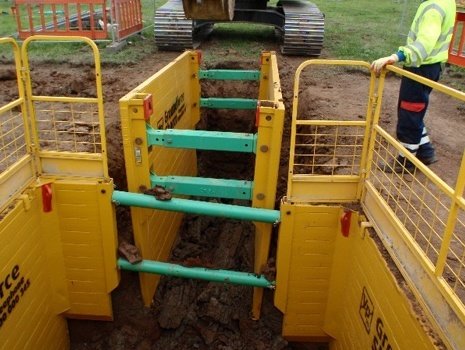
Common Uses for Trench Boxes
Common uses for trench boxes include key scenarios where they provide essential cave-in protection when alternative solutions, such as piling, wouldn’t be practical.
- Trenches are typically long and relatively narrow; trench boxes are specifically designed to suit this configuration.
- They are more effective for supporting vertical-walled trench runs than most other types of excavation support systems.
- Sloping requirements vary depending on soil type.
- Stable soil can typically be battered back to around 53 degrees before additional support is required.
- Very unstable soil can only be battered to approximately 34 degrees before a trench box or other protective system becomes necessary.
Benefits of Trench Boxes
There are numerous benefits of trench boxes:
- Reduced soil removal costs - While sloping is often viewed as the least expensive trenching method, it requires significant excavation and soil removal. Trench boxes minimise this by allowing for vertical trench walls.
- Improved safety and structural support - Trench boxes provide substantial protection against cave-ins, offering vital support for workers in the trench.
- Greater efficiency in confined areas - They enable safe working in narrow or restricted spaces where battering or benching may not be feasible.
- Adaptability to varying site conditions - Suitable for different soil types and trench depths when correctly specified.
Please note that proper use is essential to ensure your boxes provide optimal protection. Research your trench specifications and requirements before proceeding with box installation.
Please get in touch today if you are unsure about your shoring requirements.